Explore our wholesale-ready security matrices, engineered for continuous operation, compliance, and multi-protocol network integration.
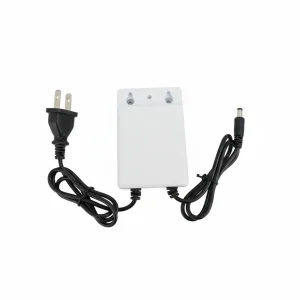
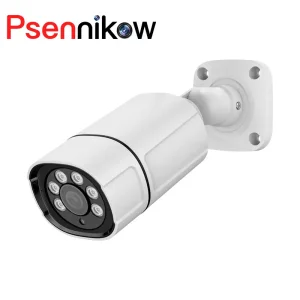
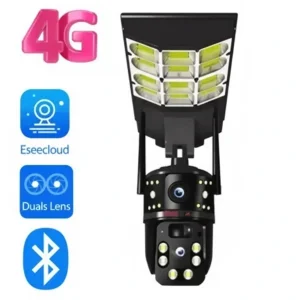
Why 2-Megapixel image capture remains the global benchmark for enterprise efficiency, network bandwidth optimization, and low-light performance.
In the search for industrial surveillance equipment, systems engineers face a critical bottleneck: transmission bandwidth and storage footprint. While 4K (8MP) cameras capture larger visual sizes, they demand substantial system resources. A 2MP (1080P) CCTV camera provides the ideal balance for enterprise deployments. Operating at 1920x1080 resolution, a 2MP camera achieves clear facial identification and license plate recognition under standard distance metrics while consuming up to 70% less bandwidth compared to 4K alternatives when paired with modern H.265+ codecs.
Modern commercial operations use localized artificial intelligence at the edge rather than central server clusters. 2MP CCTV streams allow factories to run local AI analytics—such as line crossing detection, human intruder tracking, and queue management—directly on the camera's system-on-chip (SoC). This localized deployment reduces transmission costs, decreases network load, and ensures fast reaction times for perimeter defense systems.
Founded in 2013, we deliver global security solutions through engineering, manufacturing quality, and robust supply chain networks.
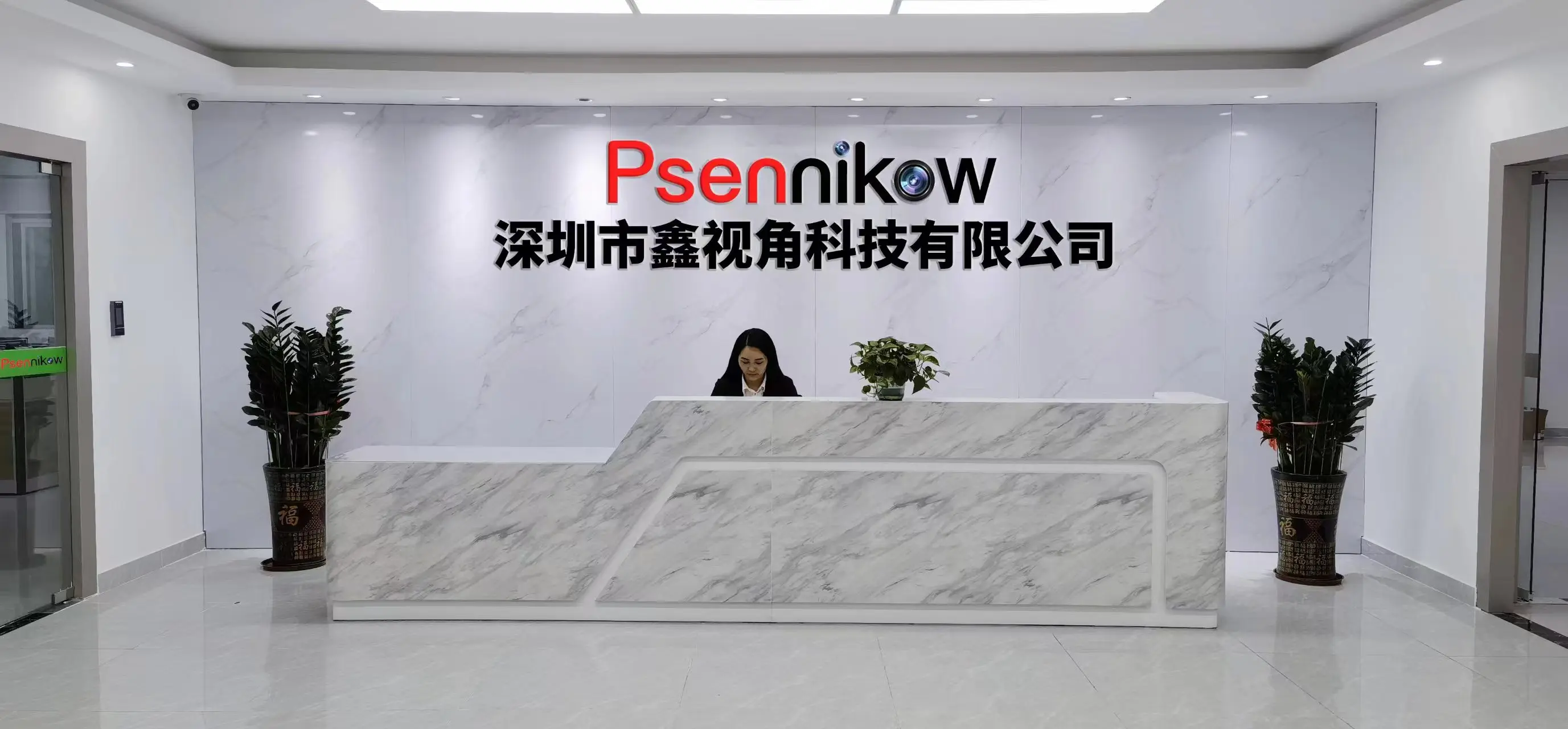
Shenzhen Xin shi jiao Technology Co., Ltd. has established a strong presence in the security industry. Our products are widely used across government installations, transportation hubs, large-scale enterprises, residential communities, medical facilities, educational campuses, and public security frameworks. Our design and development teams are committed to continuous product evolution, ensuring reliable hardware performance for global clients.
Originally founded in 2013 as Shenzhen Xin Vision Technology Co., Ltd., we combine professional R&D, manufacturing, sales, and post-purchase service into a unified operation. Our product line includes low-power solar cameras, network cameras, and high-definition analog kits designed for diverse deployment environments.

Driven by a commitment to security technology, Xin Vision engineers developed coaxial high-definition cameras to prevent data tampering. Building on this development, the company launched digital network cameras to overcome transmission distance limits and signal interference common in older analog installations.
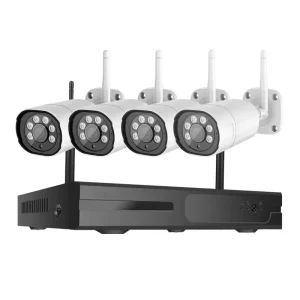
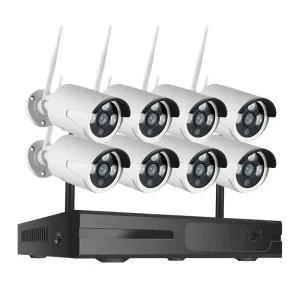
Following these developments, Xin Vision launched additional security lines, including WiFi series systems, wireless kits, and low-power solar-powered cameras. Our systems protect lives and property worldwide, providing scalable security infrastructure for municipal, industrial, and commercial operations.
How we address regulatory requirements, custom specifications, and supply chain demands for international buyers.
Our products meet international regulatory requirements, including CE, FCC, RoHS, and WEEE standards. We also offer ONVIF-compliant firmware options, allowing our cameras to integrate with third-party VMS platforms like Milestone, Genetec, and Synology.
We offer custom manufacturing options, including private-label logo printing, custom housing colors, tailored firmware configurations, and modifications to network protocols.
We manage raw materials through structured relationships with sensor manufacturers (such as Sony and OmniVision) and chip vendors (including Fullhan and Novatek), maintaining component availability even during periods of global supply volatility.
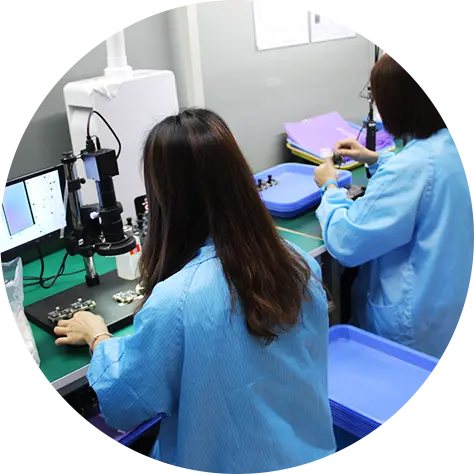
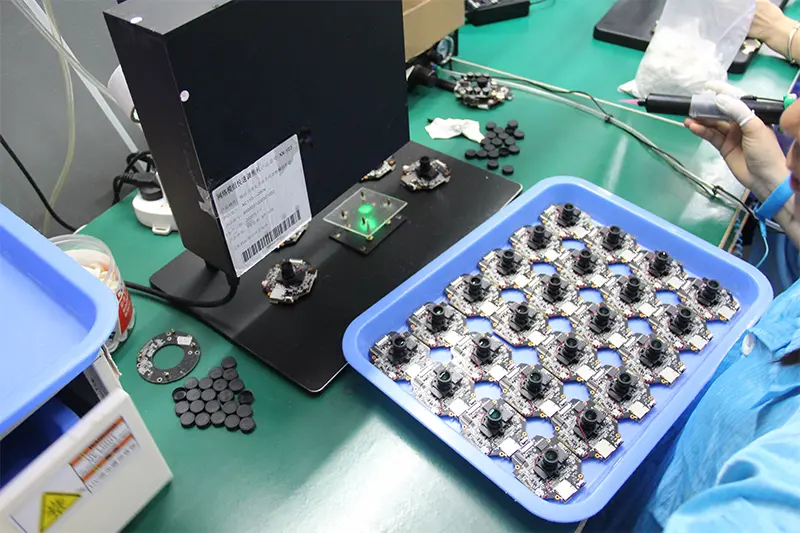
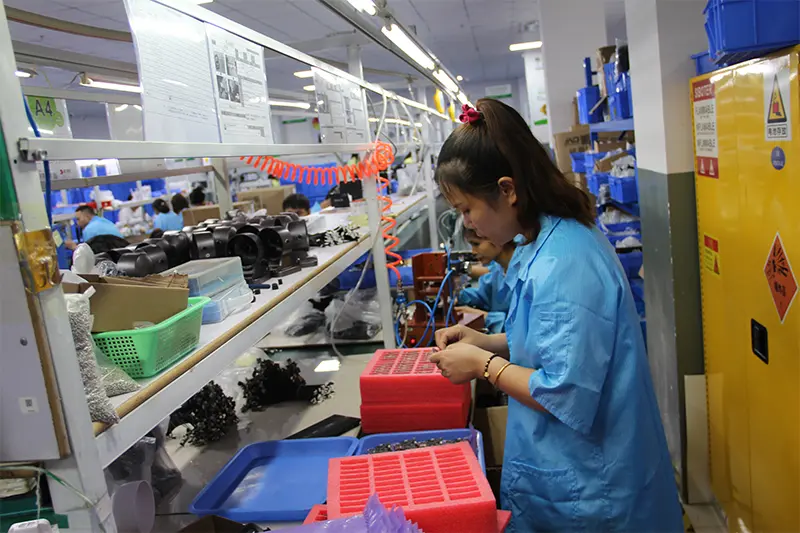
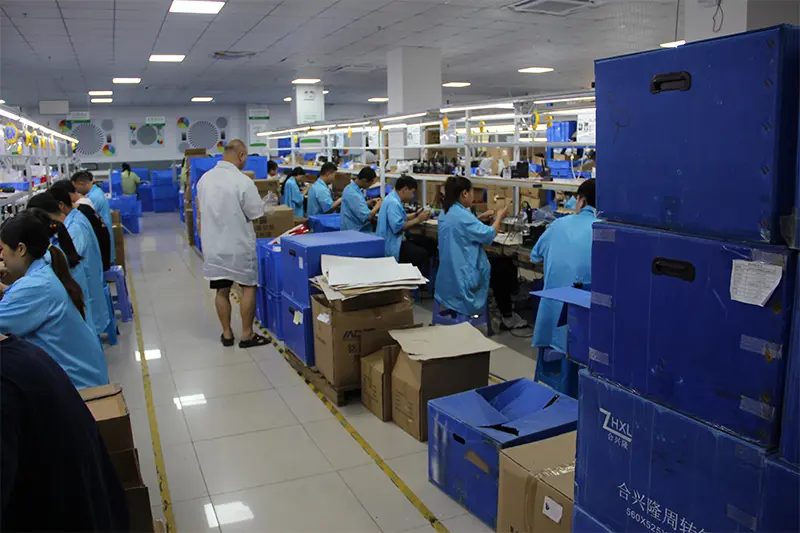
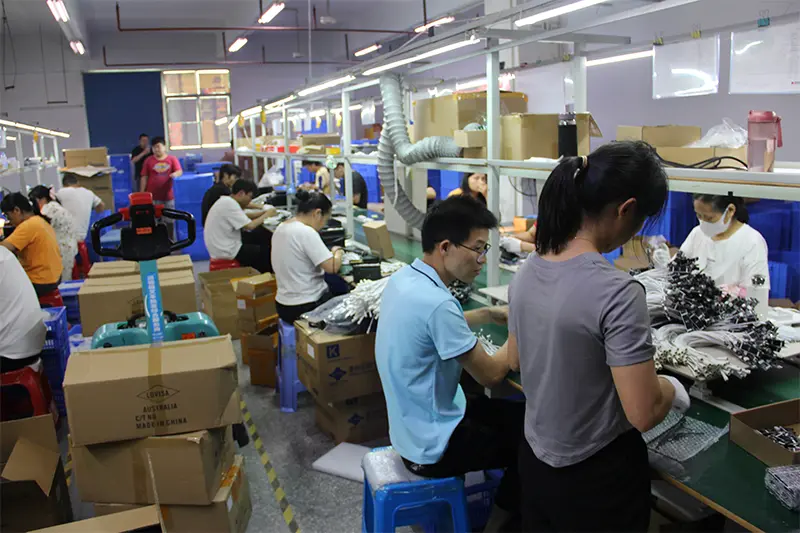
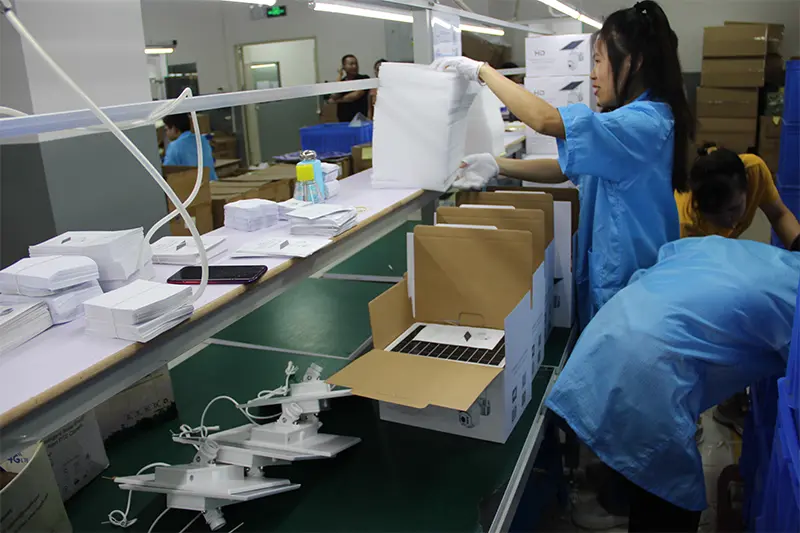
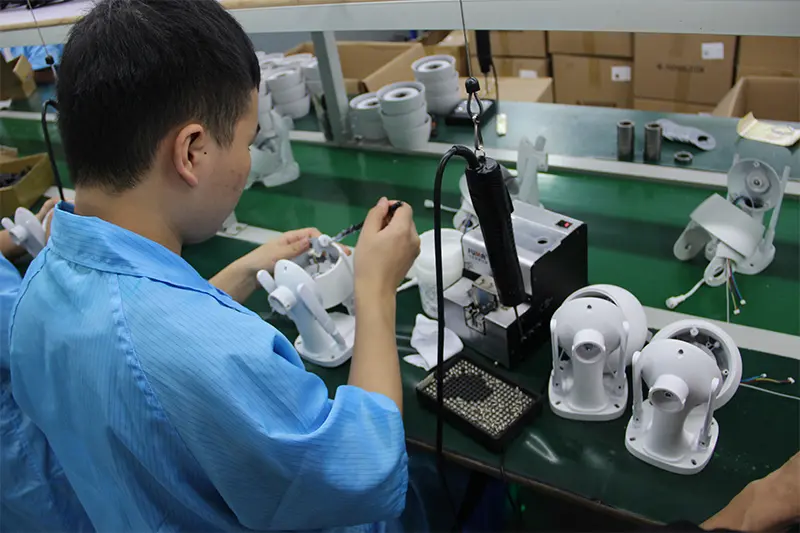
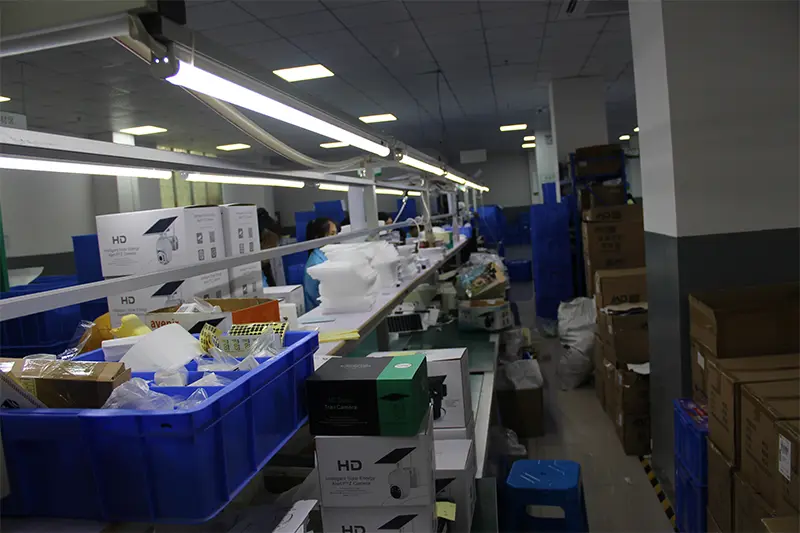
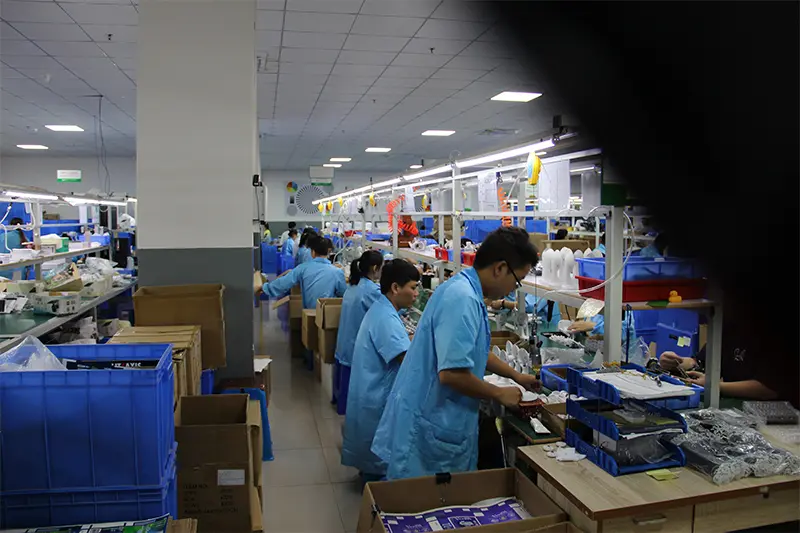
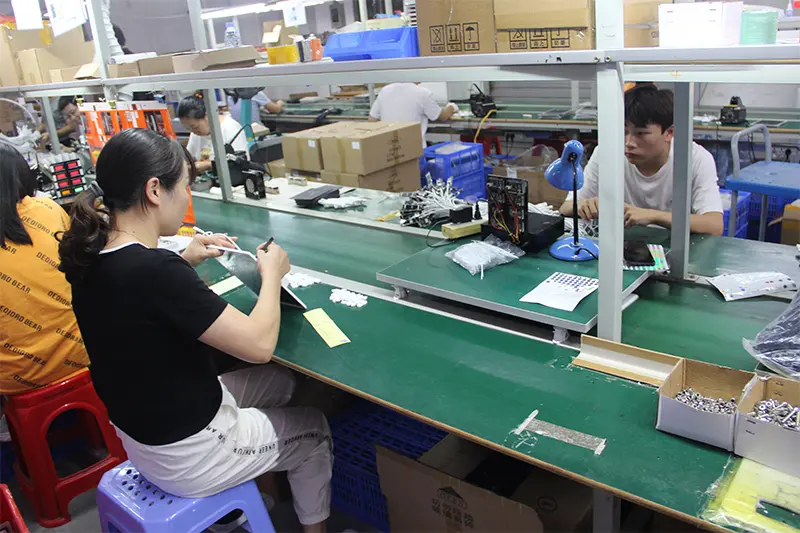
Inside our Shenzhen facility, combining automated production with strict testing protocols.
Our production floor utilizes automated SMT (Surface Mount Technology) assembly lines to ensure precise placement of DSP processors, DDR flash memory modules, and multi-layer PCBs. This automated approach minimizes human error, resulting in stable electrical performance and low RMAs.
We maintain quality consistency by monitoring solder paste viscosity, reflow oven temperature curves, and optical alignment. Our production procedures conform to ISO9001 quality management standards, ensuring each production batch meets commercial reliability requirements.
Engineered to adapt to diverse environment requirements, from urban power grids to remote off-grid locations.
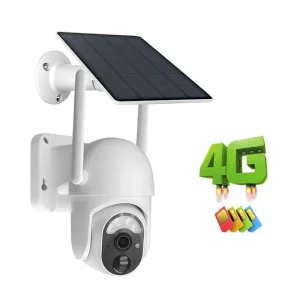
Our low-power 4G/WiFi solar cameras monitor livestock and remote agricultural fields. Utilizing PIR human motion tracking and cloud-based storage, these systems capture activity while operating independently of local power grids.
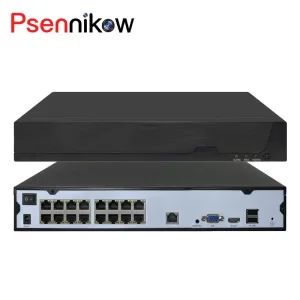
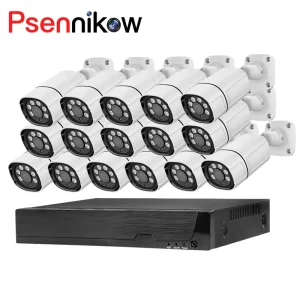
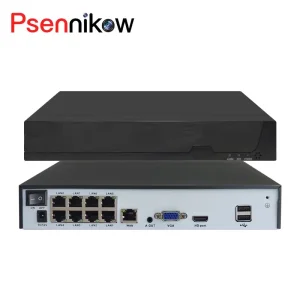
Our 16-channel PoE systems connect power and data over a single Ethernet cable, simplifying logistics warehouse installations. The integrated 2MP cameras capture loading bay operations without degrading network bandwidth.
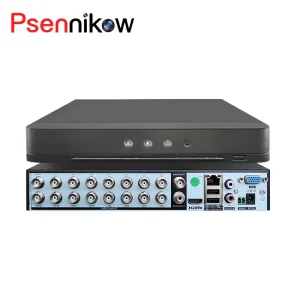
Our AHD Hybrid DVRs allow facilities to upgrade to high-definition video over existing coaxial wiring, avoiding the expense of running new network cabling.
Common questions from engineering teams, purchasing managers, and distributors.
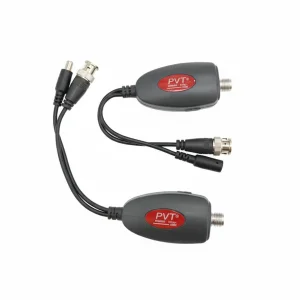
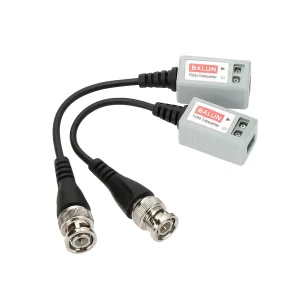
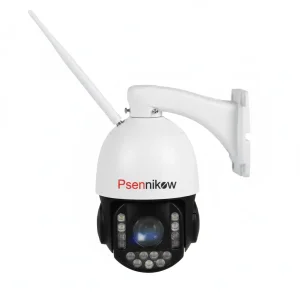
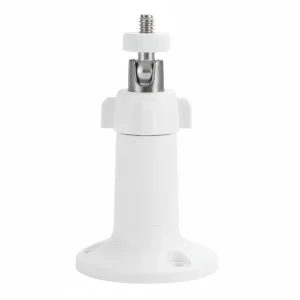
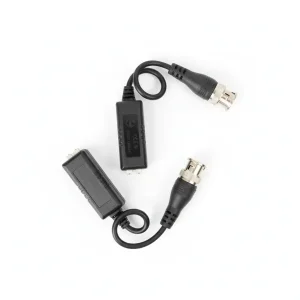
Complete your deployment with our range of PTZ dome cameras, mounting hardware, and transmission baluns.
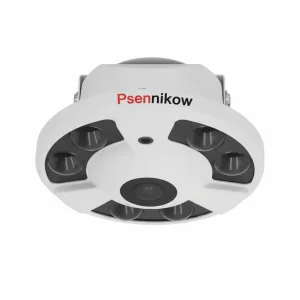
 Psennikow