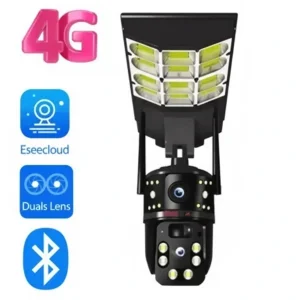
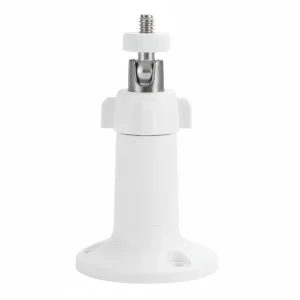
CE-certified high-definition network hardware, solar integration kits, and long-range video signal transceivers.
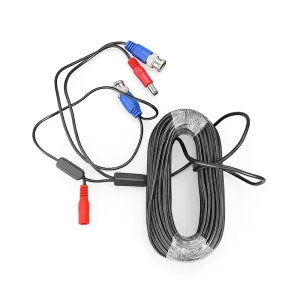
Analyzing trends toward autonomous energy, advanced localized wireless protocols, and stringent compliance standards.
The security and physical surveillance landscape is undergoing a monumental evolution. In traditional environments, deploying cameras meant navigating complex structured cabling, running redundant coaxial channels, and establishing dedicated local networks. However, the rise of wireless security camera platforms and low-power off-grid solar cameras has rewritten standard installation paradigms. Modern global enterprises demand highly resilient security solutions that combine high bandwidth, minimal latency, extreme energy efficiency, and total regulatory compliance.
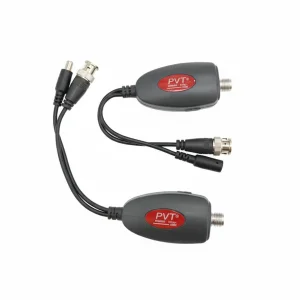
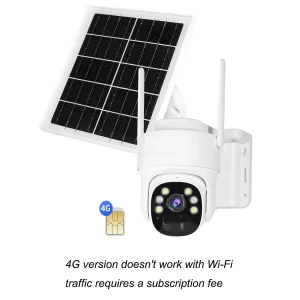
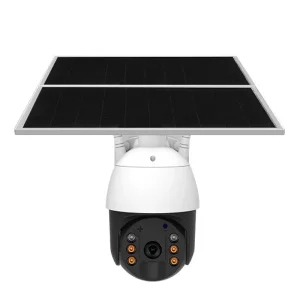
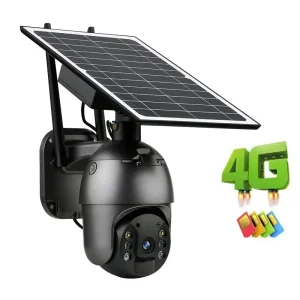
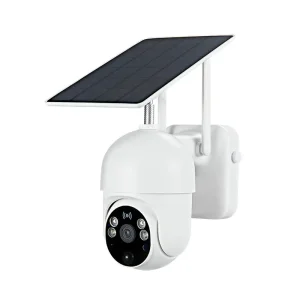
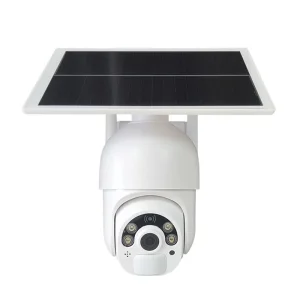
From a technology and design standpoint, modern security networks are moving away from passive systems to intelligent, self-sustaining endpoints. Solar-powered wireless cameras are leading this transition. Enabled by Ultra-Low Power (ULP) System-on-Chips (SoCs), advanced power-management integrated circuits (PMICs), and highly efficient monocrystalline solar modules, these units operate continuously even in low-sunlight environments. Concurrently, wireless video transmission technologies have advanced beyond typical consumer WiFi limits, incorporating hybrid long-range proprietary protocols and advanced coaxial transceivers (such as HD-PVT Active Transmitters) capable of carrying video signals and power over unprecedented distances.
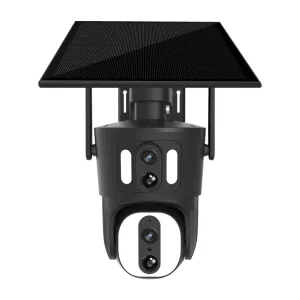
Advanced integration of high-efficiency solar cells paired with robust Lithium Iron Phosphate (LiFePO4) storage batteries. This guarantees uninterrupted operation even during multi-day overcast periods without grid connectivity.
Deployments utilizing multi-band 2.4GHz/5.8GHz configurations and proprietary sub-GHz RF transmissions. These technologies mitigate common industrial interference, ensuring high-definition video throughput.
Adherence to global certification frameworks, focusing on CE directives (RED, EMC, LVD) for structural safety, RF emission levels, and environmental durability in industrial environments.
Mitigating deployment delays, quality variations, and compliance risks through standardized engineering metrics.
For international enterprise buyers, procurement executives, and system integrators, selecting the right CE certification CCTV wireless camera supplier involves evaluating complex logistical and technical requirements. The challenges range from ensuring consistent physical manufacturing tolerances to verifying that RF transmitters meet stringent regional directives. A failure in certification or product consistency can halt large-scale infrastructure projects, trigger regulatory fines, and compromise local site safety.
To streamline sourcing processes, procurement teams should evaluate suppliers against core engineering benchmarks. Below is a reference matrix outlining critical requirements for commercial wireless security hardware:
| Hardware Classification | Standard Specifications | Required Certifications & Standards | Operational Advantages |
|---|---|---|---|
| Low-Power Solar Cameras | 4MP/8MP CMOS Sensors, PIR Motion Tracking, Low Sleep Current (<500µA) | CE-RED, FCC, RoHS, IP66/IP67 Waterproof | Autonomous outdoor monitoring with no power grid infrastructure needed. |
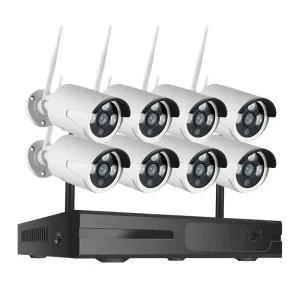
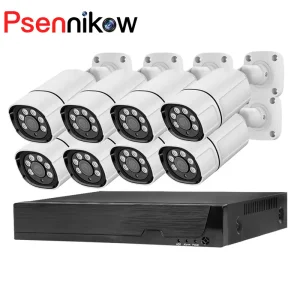
| Wireless WiFi NVR Kits | Dual-antenna, H.265+ Compression, Up to 8-channel synchronized recording | CE (EMC & LVD), ONVIF Profile S/T compliance | Plug-and-play local wireless networks, reducing onsite setup times by up to 60%. |
| Active Video Transmitters | HD-PVT (CVI/TVI/AHD compatible), Coaxial power & data over 800m | CE Certification, Lightning Protection Level III | Enables integration of legacy analog infrastructure with modern digital monitoring. |
| Industrial PoE Cameras | Ultra HD 4K (8MP), Pan/Tilt/Zoom, ONVIF Protocol, 48V IEEE 802.3af/at | CE, FCC, IK10 Impact Resistant Rating | Single-cable solution for power and data transmission across high-security facilities. |
Shenzhen Xin Vision Technology Co., Ltd. (Shenzhen Xin shi jiao Technology Co., Ltd.)
Shenzhen Xin Vision Technology Co., Ltd. (also registered under Shenzhen Xin shi jiao Technology Co., Ltd.) has established a prominent position in the security industry. Our products are widely deployed across government systems, transportation networks, enterprise sites, residential communities, healthcare facilities, education systems, and public security networks, making a lasting contribution to social safety.
Founded in 2013 with a core team holding over 15+ years of experience in the security industry, we operate on the core values of professionalism, integrity, and win-win partnerships. We are a fully integrated industrial enterprise, combining professional R&D, precision manufacturing, global sales, and technical service under one roof. Our product portfolio focuses on low-power solar cameras, network IP cameras, integrated kit series, and advanced accessories designed to meet the demands of both networked and off-grid environments.
Our journey began with a vision to bring advanced security technology to a broader audience, safeguarding life and property. To realize this goal, our R&D team successfully developed innovative coaxial high-definition cameras that capture fine details while incorporating robust data protection mechanisms to secure video feeds.
We then expanded into digital network cameras, eliminating the transmission distance limits and signal degradation issues typical of traditional analog systems. Building on these successes, our team designed and produced WiFi series products, wireless recording kits, and low-power solar cameras to meet the dynamic needs of the international marketplace. Today, our engineers continue to focus on design optimization, ensuring our solutions provide long-term reliability for global buyers.



How system integrators leverage CE-certified wireless and solar technology to resolve real-world deployment challenges.
Modern surveillance systems require adaptable designs. Large-scale projects cannot rely on a one-size-fits-all hardware architecture. Below are four key deployment scenarios where specialized CE-certified wireless cameras provide significant functional and financial benefits:
Construction sites often lack permanent electrical grid hookups and broadband access. A low-power solar camera with 4G/LTE connectivity or long-range point-to-point wireless transmission is ideal here. These units operate on clean energy, record continuously to local SD storage, sync with cloud databases, and utilize PIR and human motion tracking to prevent theft and monitor project progress.
For municipal authorities, running trench cables across railways, highways, or shipping ports is cost-prohibitive. High-speed, dual-antenna wireless surveillance kits allow cameras to transmit 1080P/5MP video back to a central NVR up to several hundred meters away. By avoiding invasive cable trenching, municipalities save on installation costs while maintaining real-time traffic and logistics monitoring.
Farms, reservoirs, and forestry sites span wide geographic areas that make wired networking impractical. Low-power, weather-resistant outdoor solar cameras monitor perimeters, livestock, and environmental hazards. Advanced night vision, cloud integration, and two-way audio provide operators with a comprehensive security tool managed from a remote dashboard.
A transparent look at our specialized manufacturing processes, assembly setups, and testing facilities.
Our manufacturing facility employs rigorous quality control measures. Each product—from coaxial high-definition transmitters to solar-powered outdoor network cameras—undergoes multi-phase testing. This includes optical calibration, RF signal strength measurements, waterproof testing, and high-temperature burn-in cycles. This process ensures all equipment delivers consistent performance for years of outdoor service.









The necessity of CE marking for wireless security hardware entering global markets.
The CE (Conformité Européenne) marking is not just a commercial label; it is a legal requirement for selling electronic hardware in the European Economic Area (EEA). For security devices that transmit wireless RF signals (such as 2.4GHz/5.8GHz WiFi cameras or 4G LTE cameras), CE compliance is governed by the Radio Equipment Directive (RED) 2014/53/EU. This directive mandates that all radio equipment must operate without causing electromagnetic interference while ensuring user safety from electrical and RF exposure.
In addition to the RED directive, outdoor surveillance equipment must comply with the Low Voltage Directive (LVD) 2014/35/EU and the Electromagnetic Compatibility (EMC) Directive 2014/30/EU. These regulations verify that built-in power adapters, charging systems, and internal circuitry remain stable during power surges, lightning strikes, or temperature extremes. When purchasing security hardware, international buyers should verify that all CE certifications are backed by accredited laboratory test reports (covering EN 301 489, EN 300 328, and EN 62368-1 standards). Partnering with a compliant manufacturer ensures project safety and smooth customs clearance.
The future of security hardware lies in greater system autonomy. We are working to integrate Edge AI processing directly into low-power chipsets. Future solar-powered cameras will utilize localized machine learning algorithms to distinguish between humans, vehicles, and environmental motion. By filtering out false alarms, these devices can remain in a low-power standby state for longer periods, reducing bandwidth consumption and battery drain.
Concurrently, advancements in battery technology, such as solid-state and wide-temperature LiFePO4 cells, will extend the operating range of outdoor equipment. This ensures reliable operation in extreme cold or heat, making off-grid wireless systems a viable choice for high-latitude and desert environments.
Essential insights for B2B procurement managers, engineers, and system installers.
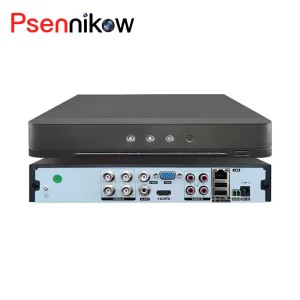
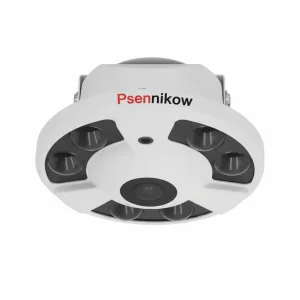
Explore our full line of network video recorders, panoramic dome systems, and installation hardware.
 Psennikow